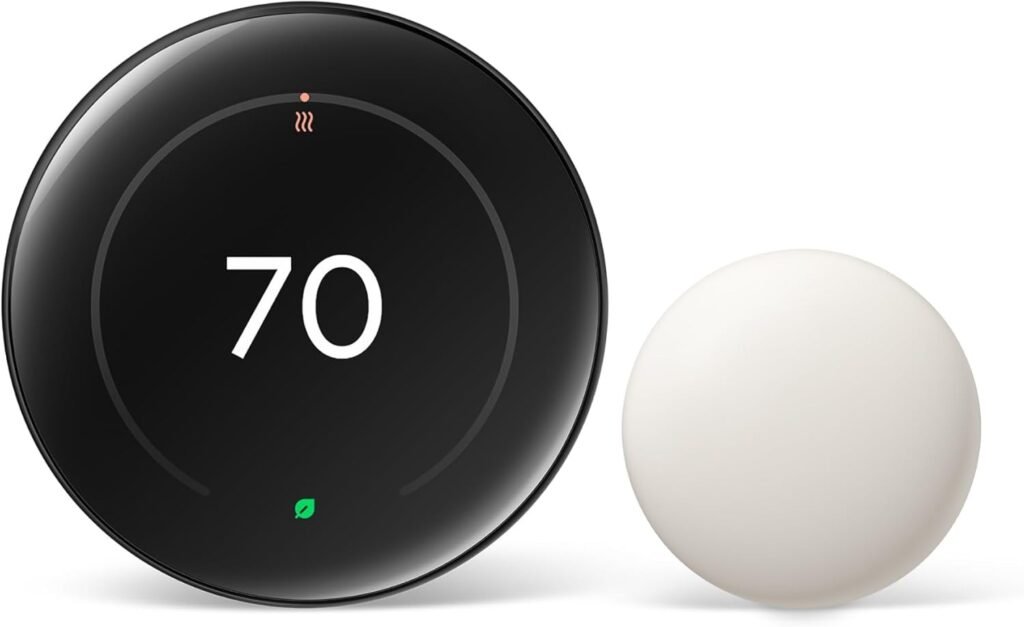
Builds its own schedule automatically within about a week by learning when you adjust the temperature — no manual programming needed
The bundle includes a Temperature Sensor, so a chilly bedroom or hot upstairs room can be prioritized instead of just the hallway where the thermostat lives
Works with Google Home, Amazon Alexa, and Apple HomeKit, so it fits whichever smart home ecosystem you're already using
The Farsight display lights up and shows the time, weather, or temperature as you approach the room
The priciest of the three thermostats here, and Auto-Schedule needs a week or two of manual corrections before it settles into an accurate routine
Some HVAC systems will need a C-wire adapter or a professional install, so it's worth checking your wiring before buying
Nest basically created the smart thermostat category, and the Learning Thermostat is still the product most people picture when they hear the name. Instead of you programming a schedule, it watches what temperature you actually set over the first week or two and builds its own — most people never touch the schedule again after that.
This 4th-generation model comes bundled with a Nest Temperature Sensor, a small puck you can place in whichever room actually matters most (a bedroom, a nursery) so the thermostat heats and cools based on that room’s temperature instead of just the hallway where it’s mounted.
Pros
Auto-Schedule builds a programming schedule from your actual behavior — no manual setup required after the first week or two
Includes a Nest Temperature Sensor so it can prioritize the temperature in a specific room, not just where it's mounted
Works with Google Home, Amazon Alexa, and Apple HomeKit (via Google Home's HomeKit support)
Farsight display lights up and shows time, temperature, or weather from across the room
Cons
Priciest of the three thermostats here, especially with the sensor bundle
Auto-Schedule needs a week or two of correcting before it settles into an accurate routine
Some HVAC systems without a C-wire need a separate adapter or professional install for full functionality
Specs
Compatibility
Most 24V systems, including heat pumps
App
Google Home
Voice control
Google Assistant, Alexa, Siri (via HomeKit)
Learning
Auto-Schedule builds a routine after about 1–2 weeks
Included sensor
Nest Temperature Sensor (1)
Display
Farsight ambient light-up display
Verdict
If you want a thermostat that mostly runs itself once it's learned your routine, and you're already living in the Google/Alexa/HomeKit ecosystem, the Learning Thermostat is still the benchmark the others get compared to. It costs more than the alternatives here, but the included room sensor and genuinely useful auto-scheduling are hard to match.
Common Questions
Do I need a C-wire for the Nest Learning Thermostat?
Most systems built after 1995 have one, but if yours doesn't, Nest includes tools to work around it in many homes, and some setups need the optional Nest Power Connector or a pro install.
How long does Auto-Schedule take to learn my routine?
Give it about a week of normal manual adjustments and it starts building an accurate schedule on its own; you can keep correcting it as your routine changes.
Does the included Temperature Sensor need its own batteries?
Yes, it runs on a coin-cell battery that typically lasts about two years, and you can add more sensors later to cover additional rooms.
Will this work with Alexa if I don't use Google Home?
Yes, the Nest Learning Thermostat supports Alexa and Apple HomeKit in addition to Google Home, so you're not locked into one ecosystem.