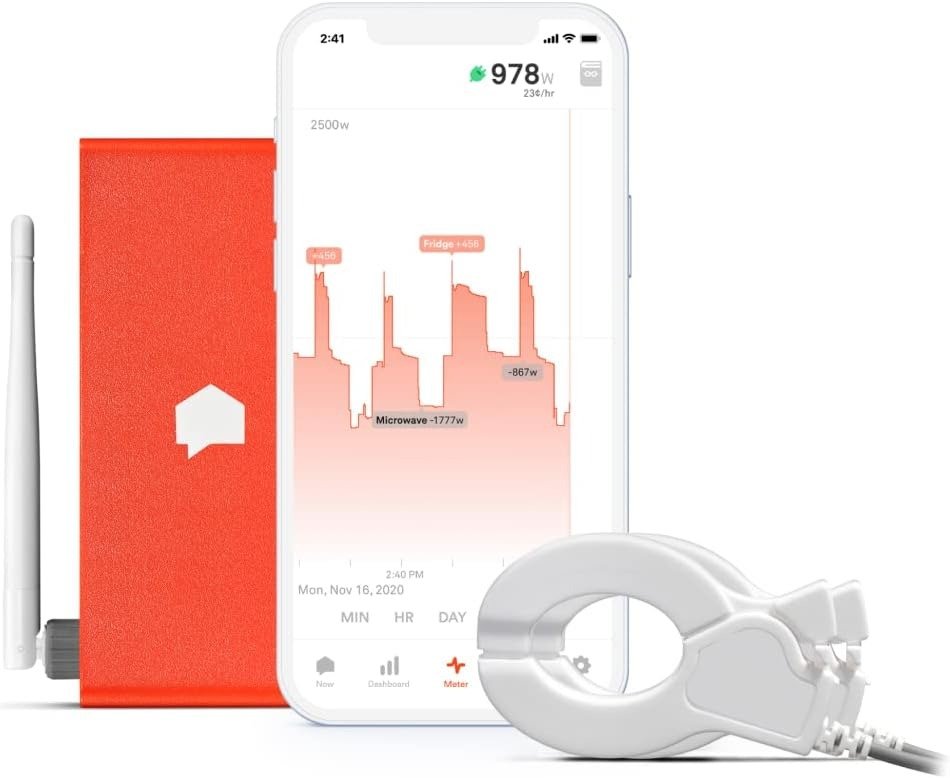
Just 2 clamps at the main panel — no per-circuit sensors to wire, unlike Emporia or Refoss
Machine learning identifies individual appliances by their electrical signature, no smart plugs required
Device detection takes 2–4 weeks to fully mature — it gets sharper over time, not instant
Built-in solar production, consumption, and net-export tracking with no extra hardware
No subscription required for full device detection and historical data
At $299 for whole-home coverage, it's the most expensive of the three, and installation requires comfort with live panel work or an electrician
Sense’s Energy Monitor takes a different approach to knowing what’s using power in your house: instead of wiring a sensor to every circuit, two clamps at your main panel and a few weeks of machine learning figure out which appliance is which — no smart plugs, no guesswork.
Sense Energy Monitor
Sense's Energy Monitor takes a different approach to knowing what's using power in your house: instead of wiring a sensor to every circuit, two clamps at your main panel and a few weeks of machine learning figure out which appliance is which — no smart plugs, no guesswork.
Product Brand:
Sense
Product Currency:
USD
Product Price:
299
Product In-Stock:
InStock
Editor's Rating: 5
Pros
No smart plugs or per-circuit sensors needed — just 2 clamps at the panel and machine learning does the rest
Built-in solar production and net-export tracking without extra hardware
Backed by strong third-party reviews (8.7/10 consensus across CNET, The Verge, and Wirecutter)
No subscription required for full device detection and historical data
Cons
Device detection takes 2–4 weeks to fully learn your home's appliances — not instant
Installation is inside the panel itself, so it needs an electrician or real comfort with live electrical work
Some smaller or similar-signature appliances can be hard for the ML to tell apart
At $299 for just 2 clamps, it's a pricier way to get less granular detail than Emporia or Refoss offer per circuit
Specs
Monitoring
2 CT clamps at the main panel (no per-circuit sensors)
Detection
Machine-learning device fingerprinting, 1 million samples/second
Setup time
2–4 weeks for device detection to mature
Solar
Built-in production, consumption, and net-export tracking
Subscription
None required
Install
Panel-mounted — electrician recommended
Verdict
Sense is the closest thing to "set it and forget it" whole-home monitoring — no per-circuit sensors to wire up, just two clamps and patience while the machine learning catches up. It's the right call if broad visibility and solar tracking matter more to you than knowing exactly which circuit is running high the moment it happens.
Common Questions
Do I need to know which appliance is which before I install it?
No — that's the point. Sense's machine learning figures out which device is which from its electrical signature over the first several weeks; you don't pre-configure anything.
Can I install Sense myself?
It's possible if you're genuinely comfortable working inside an energized panel, but most people have an electrician do it — the clamps go directly on the main leads.
What happens if Sense can't identify one of my appliances?
It still shows up as unidentified usage in your total — you won't lose visibility into what's using power, just the specific label for it, and you can often name it manually.
Does Sense work with solar panels I already have?
Yes — it has built-in production, consumption, and net-export tracking for solar, no separate hardware needed.